Table Of Content

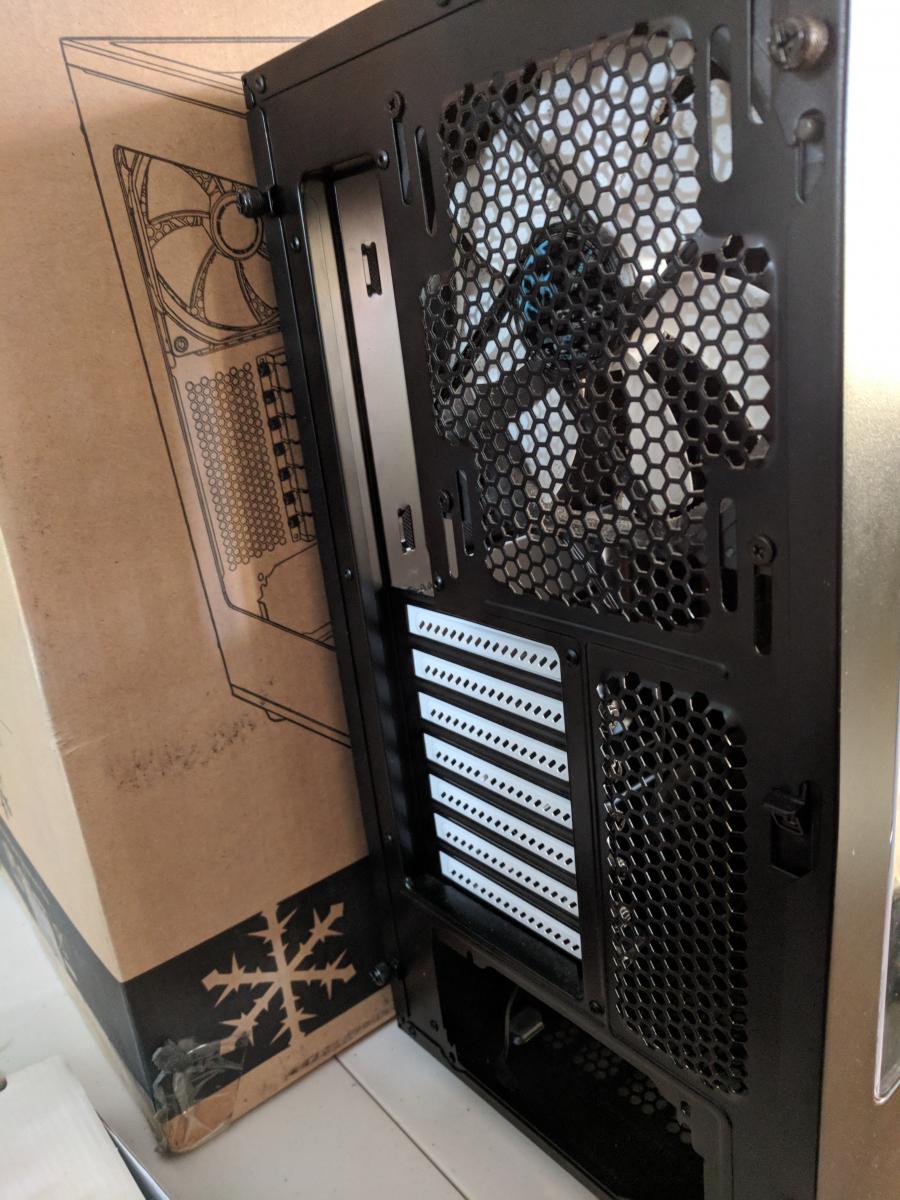
The top of the chassis will allow for thinner radiators and fans without obstruction to the motherboard. First, we can see the size of the mesh won't block much flow at all, and we also see that there are squeeze clips for releasing the ModuVent. On the inside of both of the side panels, almost edge to edge, you will find this heavy, multi-layered, sound deadening material. You can easily pull the screws and remove the ModuVent panel to install a fan of your choice.
quick release system
I may sound like a broken record when I compare the cases I test to the 450D, but we really like Corsair’s midrange mid-tower here at TR, and as of yet, we haven’t found another enclosure that matches its solid mix of virtues. Around back, there’s another 140-mm spinner, seven expansion slots, and a mount for the power supply at the bottom of the case. To paraphrase a Steve Jobs-ism, however, it’s important to remember that design isn’t just about how something looks, but also how it works. Companies can pay as much lip service as they like to the idea of good design, but the rubber has to hit the road at some point. Let’s see whether Fractal Design’s Scandinavian approach has produced an enclosure that measures up.
Fractal Design Define R5 Black Silent ATX Midtower Computer Case
As we take our first look inside, we find the wiring is bundled and passed through the motherboard tray for transit, and there is a hardware box in the lowest drive bay. First, there is the part that attaches to the chassis that affords room for the front I/O panel, the removable bay covers, dust filter, and side entry ventilation. Then there is the thinner flat door panel, which is made mostly of plastic, but offers a brushed metal appearance. At the back of the chassis, there are seven expansion slots, and the motherboard tray is capable of housing an ATX, a Micro-ATX, or a Mini-ITX motherboard. The Define’s foam-covered side panels seem to insulate the SSD mounts on the back of the motherboard tray.
Define R5: Water Cooling Radiator Options
To cover this area, and keep the silence in check, Fractal offers this three-piece ModuVent system to cover the honeycomb mesh below. For all of you that have had, or currently have the pleasure of housing your gear in a Fractal Design chassis, this chassis will not be a hard sell to you at all. You will very much appreciate what has gone into this design, and with very little more than a few pictures, we are sure you will be off to find this chassis for your next build. For those of you that have never had the pleasure of owning a Fractal Design chassis from any series, we feel that you will want to take a long hard look at what their latest chassis has brought to the market. The panels are a neat idea, but I wish Fractal had made their retaining clips more finger-friendly.
Smart and Stylish: Watches That Can Do a Little More Than Tell Time
To sort of counteract that though, this model is intended to have users go all out, as the chassis is designed to handle it, and the stock fans may not even stay in the build at all. Just in case the description in the specifications and the tour around the chassis left you a bit confused, here is one last look at the fan locations. Of course, the floor of the chassis offers room for the PSU, but it is also open to rearranging the HDD cages in the middle, or possibly even a fan. Once the cages are completely removed, two fans should fit on front of the PSU.
Dust Filters
Add to that the numerous enhancements to every aspect of component and cooling support, and it’s clear to see the Define 7 Compact has you well covered. Chad joined the TweakTown team in 2009 and has since reviewed 100s of new techy items. With overclocking comes the need for better cooling, and Chad has had many air and water setups.
Define R5: Radiator Compatibility Chart
The included Velcro straps are long enough to accommodate thick cables like the 24-pin ATX power connector without issue, and the recessed motherboard tray creates a natural 1.5″-deep cable channel around its perimeter. There’s also generous room for SATA power and data cables behind the drive cages—much more than in my Obsidian 450D or the Cooler Master Silencio 652S. The spacious cable area means that the side panel slides back on effortlessly, and the panel doesn’t bow out at all, even with the added thickness of the noise-deadening foam. The omission of a top filter is also strange considering Fractal includes a full-length filter at the bottom of the case. While some builders might put a fan or radiator down here, I think top-mounted fans or radiators are a far more common choice.
Fractal Design Define R4 Review bit-tech.net - bit-tech.net
Fractal Design Define R4 Review bit-tech.net.
Posted: Fri, 20 Jul 2012 07:00:00 GMT [source]
The understated look and feel allows for a natural fit into your home or office while never compromising on quality, performance of configurability. As we have watched the Define Series from Fractal Design grow up in the last few years, we have no doubt that the Define R5 is the pinnacle of all the models delivered to date. Installing the dust shield was easy enough, and there was no flexing of the back of the chassis needed; the GPU lined right up with the holes, and even the PSU was a cinch to get installed. There are five zip-ties, a nylon socket for the eight standoffs, including the helper standoff that is already in the center of the motherboard tray. As the NDA lifts, we are proud to bring you the Define R5, the latest, and likely greatest of the Define Series.
removable odd cage

With help of users, and a close ear on the pulse of the market, Fractal Design has yet to fail to impress us with this series of cases. From the very beginning of the Define Series, Fractal Design set out to offer the masses very solidly constructed cases with great airflow, and virtually no noise emitted into the environment. In almost every other regard, though, living with the Define R5 is a pleasure.
The door can be easily swapped to open from either side of the case, although it’s not a tool-free process. The switch for the Define R5’s built-in, three-speed fan controller can also be found here. The Define R5 case reaches the hightest level of silent computing through strategically placed dense sound-absorbing material, ModuVent™ fan vent covers and finely tuned Dynamic Series fans. But as with biological and computer structures, the story does not end at any particular scale. The boundary of a room is perforated with smaller structures like rectangular doors and windows. The boundary of larger spaces might be perforated with colonnades (we are talking about living spaces and not the dead spaces characteristic of post-war architecture and urbanism).
The Define also dampened the sound of the Casewarmer’s Cooler Master Hyper D92 quite well. I noticed barely any change in system noise during the CPU load phase of my tests. Users looking to install a liquid cooler or two in the Define R5 will find that tradeoffs are in order. Removing the ModuVent panels up top allows more noise to escape from the R5, as demonstrated by the slightly higher top-of-case noise numbers at idle. Despite the lower noise numbers under load, the radiator-equipped Define R5 also seems to let more GPU whine escape from its top vent while stressed. Installing the radiator behind the front fan mounts might be a better option for keeping noise levels down, although that depends on whether you keep your PC on top of your desk or under it.
If you want a sleek and stylish, silent PC case that has been well designed, definitely check out the Fractal Design R5. There are quite a few improvements over the previous R4, especially when it comes to air and water cooling options. On the right is a much more complex and irregular pattern with recognizably similar fractal properties, a traditional urban neighborhood in Baghdad, Iraq. Notice the similar patterning at different scales of bordering spaces and alternating patterns of indoor-outdoor space.
On top of all of that lovin' from Fractal, everything was done with water cooling potential in mind, and as you will soon see, they pulled out all the stops to make this happen. To test the R5’s radiator compatibility, I installed Cooler Master’s Nepton 240M closed-loop cooler at the top of the case. After I removed two of the modular top panels, installing the 240M was a snap. The radiator mount is offset significantly from the motherboard, so there was plenty of room to connect the Nepton’s fans to the twin CPU headers on my Asus Crossblade Ranger mobo. Builders willing to push their luck probably have enough room to mount push-pull fans on slim radiators like the Nepton 240M’s, though doing so would obstruct the rear fan considerably. With the single layer of fans, however, I avoided blocking the rear fan by sliding it down on the R5’s adjustable rear fan mount.
To get the fullest possible picture of each case’s cooling performance, I tested the Define R5 using both its built-in fan controller and the Asus Q-fan motherboard fan control system. Since the Obsidian 450D doesn’t have a built-in fan controller, I tested it using the Q-fan system only. When I used the Q-fan system, I profiled each case’s fans using Asus’ fan tuner, and I used the Standard built-in fan profile for my tests. As I noted in my dissection of the Define R5’s interior, I’m not a big fan of this case’s drive mounting system. The Define’s metal sleds require four grommets and screws per 3.5″ drive, which feels archaic nowadays. That said, the rubber grommets are soft and thick, so maybe the extra effort will pay off with lower noise and vibration levels.


No comments:
Post a Comment