Table Of Content
For those in the former group, installing the radiator up top may still be a better option. Due to operator error, I don’t have data for hard drive temperatures in the Define R5 while using the built-in fan controller with the Cooler Master Nepton 240M installed. Based on the other data I’ve collected, however, I don’t expect that the temps would be much different in this configuration. Overall, the Define R5’s interior is spacious and well-designed at first glance. Next, I’m going to install my Casewarmer system, along with some air and water coolers.
Define R5: Radiator Compatibility Chart
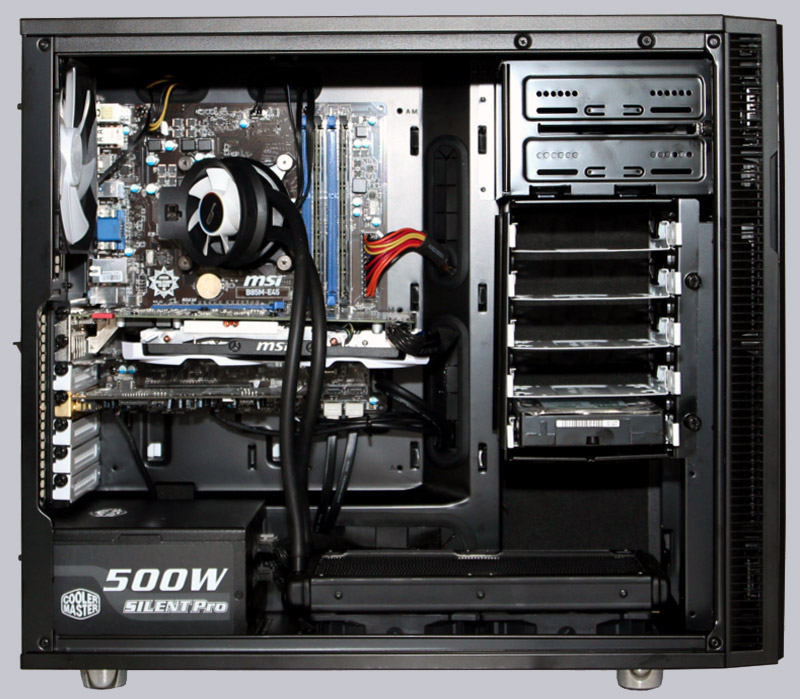
For those who do wish to add bottom-mounted cooling, removing the drive cages makes room for a pair of 120- or 140-mm fans—or a radiator up to 240 mm in length. Installing fans or radiators here will limit the length of the PSU you can install, however. Maintaining a dust-free interior with the help of dust filters that cover front and bottom air intakes that are easy to access from the front on the case. With the bulk of the interior in black, and the bays, slot covers, and fan blades in white, the chassis screams Fractal Design.
Key features
Additionally, the chassis offers a three fan, three position fan controller built into the front bezel, and the front and floor of the chassis are covered with easily accessible and removable dust filtering. The Define R5 was designed with configurability in mind, accommodating up to 8 hard drives and all modem graphics card. Should you wish to expand your system with water cooling components or more fans the layout can easily be configured to meet your demand. We can also reproduce fractal patterns in a computer, often with strangely beautiful results. Some graphic designers use fractal methods to reproduce very realistic-looking landscapes and other natural phenomena.
Thermaltake Suppressor F51 and Water 3.0 Ultimate - KitGuru
Thermaltake Suppressor F51 and Water 3.0 Ultimate.
Posted: Thu, 04 Jun 2015 07:00:00 GMT [source]
Massive airflow and great cooling features
These repetitive perforations at smaller scales—the fractal loading that results from the characteristic “generative algorithm” of fractal structure—will often continue on down to the scales of detail and ornament. The ODD cage can easily be removed to gain additional interior space; the area can be freed up to allow for increased airflow, to provide a new place for HDD cage mounting or to make more room for water cooling components. The Fractal Design Define R5 is the next evolution in the widely popular Define Series.
Fractal Design announces Define R5 Blackout with all-black interior and chassis - HardwareZone
Fractal Design announces Define R5 Blackout with all-black interior and chassis.
Posted: Fri, 08 May 2015 07:00:00 GMT [source]
Storage features
Since we left the interior stripped behind the front panel, we appreciate the bay covers, but if you want a triple radiator in the front, then you may want to remove them. We also went ahead and swapped the swing of the front panel, which took all of moving two screws and clips from one side to the other. Just touching on the cooling, we see there are nine locations, but the second bit of the chart takes it much further. As for the effectiveness of the foam-lined side panels, the results are somewhat mixed. The Define didn’t dampen their song completely, but it did cut down on the whine enough to make them only mildly distracting.
Accessories and Documentation
We also get to see the installed intake fan, and just how much room this R5 has to play around with. For now, the HDD cages are set in two sections, one cage of five, and another of three bays. Of course, they are all removable, and either section can go in at the top or bottom where you see them now. If the PSU isn't too long, you could even attach them to the floor just to the left of their current position. Where older designs had room for only two fans, there is room for up to three 120mm or 140mm fans in the R5.

Smart and Stylish: Watches That Can Do a Little More Than Tell Time
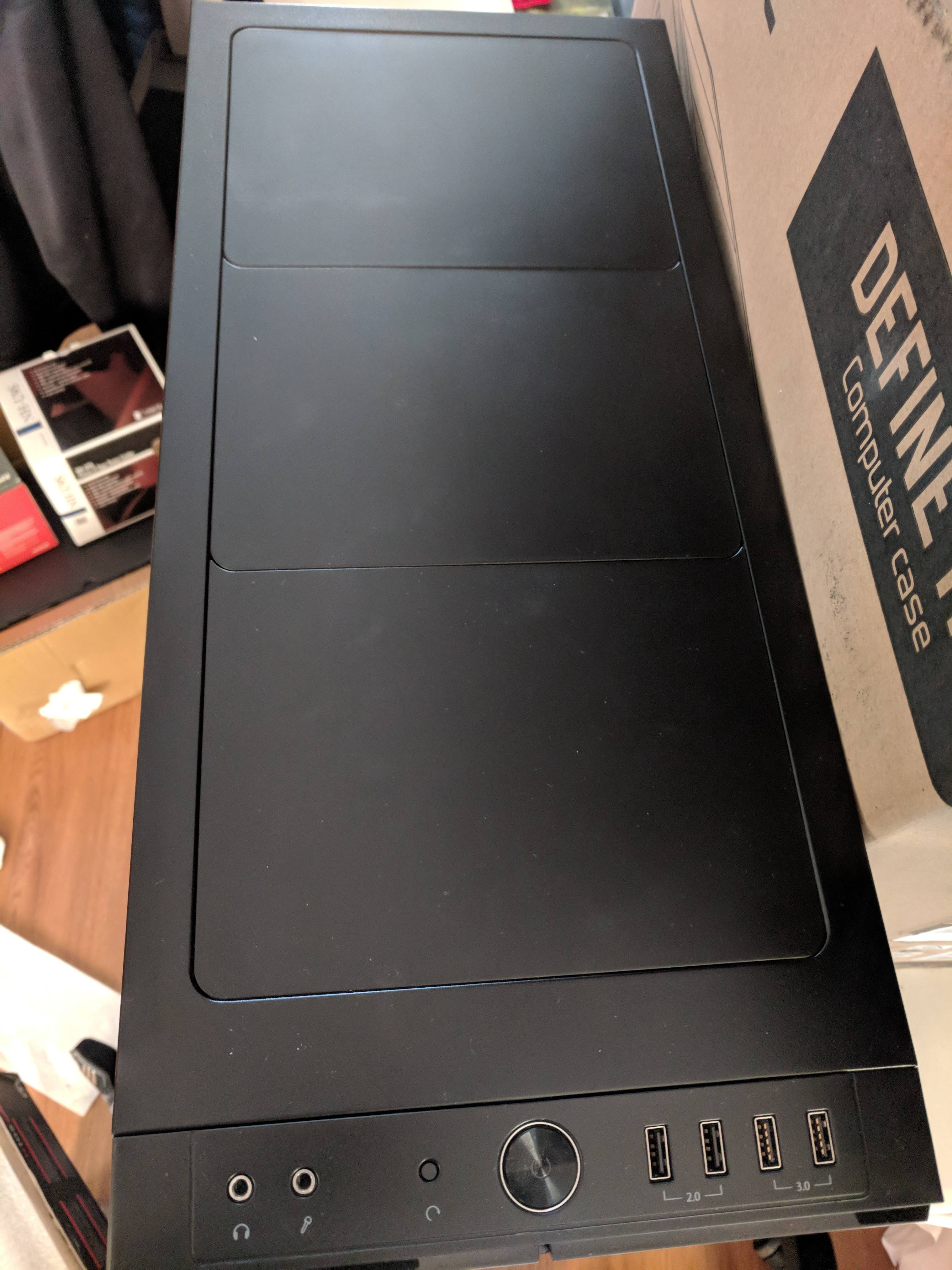
A combination power and disk activity LED is nestled into the center of the front panel, as well. Fractal uses a blue LED here, though it’s mercifully not the eye-searing kind of blue that’s tainted so much hardware in recent years. (a) Fractal loading uses a basic scale as a carrier for other successively smaller mechanisms and structures.
The Define R5 also has plentiful slots for zip ties in this area, if the Velcro straps aren’t enough. The three fan headers and SATA power connector for the built-in fan controller reside here, as well, along with two 2.5″ drive trays. Behind the door is an easily removable dust filter, a single Fractal Design Dynamic GP mm fan, and two 5.25″ bays.
Quick release system
Just below this, we find a rendering of the internal layout as it is shipped. Sticking to the basics, Fractal Design packs the Define R5 in plain cardboard with black screen printing for the naming across the top, a rendering of the chassis in the center, and the company logo and web address at the bottom. The buildAs I was expecting from its bevy of user-friendly features, the Define R5 is a pleasure to build a system in. The R5’s PSU emplacement is similar to that of other cases I’ve tested recently, which is a good thing.
We somehow recognize them as being “natural” and connect with them emotionally. We seem to be wired to “read” fractals in our environment, probably for two key reasons. When we look at a long vista, structures that repeat (trees for example), repeat at smaller apparent scales when they are farther away.
With the motherboard in control of its fans, the Define R5 is anywhere from two to four dBA quieter than the 450D for the most part, both at idle and under load. My only wish is that the cable grommets at the top of the case were a bit bigger. The Define R5’s base price is $109.99, placing it squarely in competition with our favorite mid-tower, the Corsair Obsidian 450D.


No comments:
Post a Comment