Table Of Content
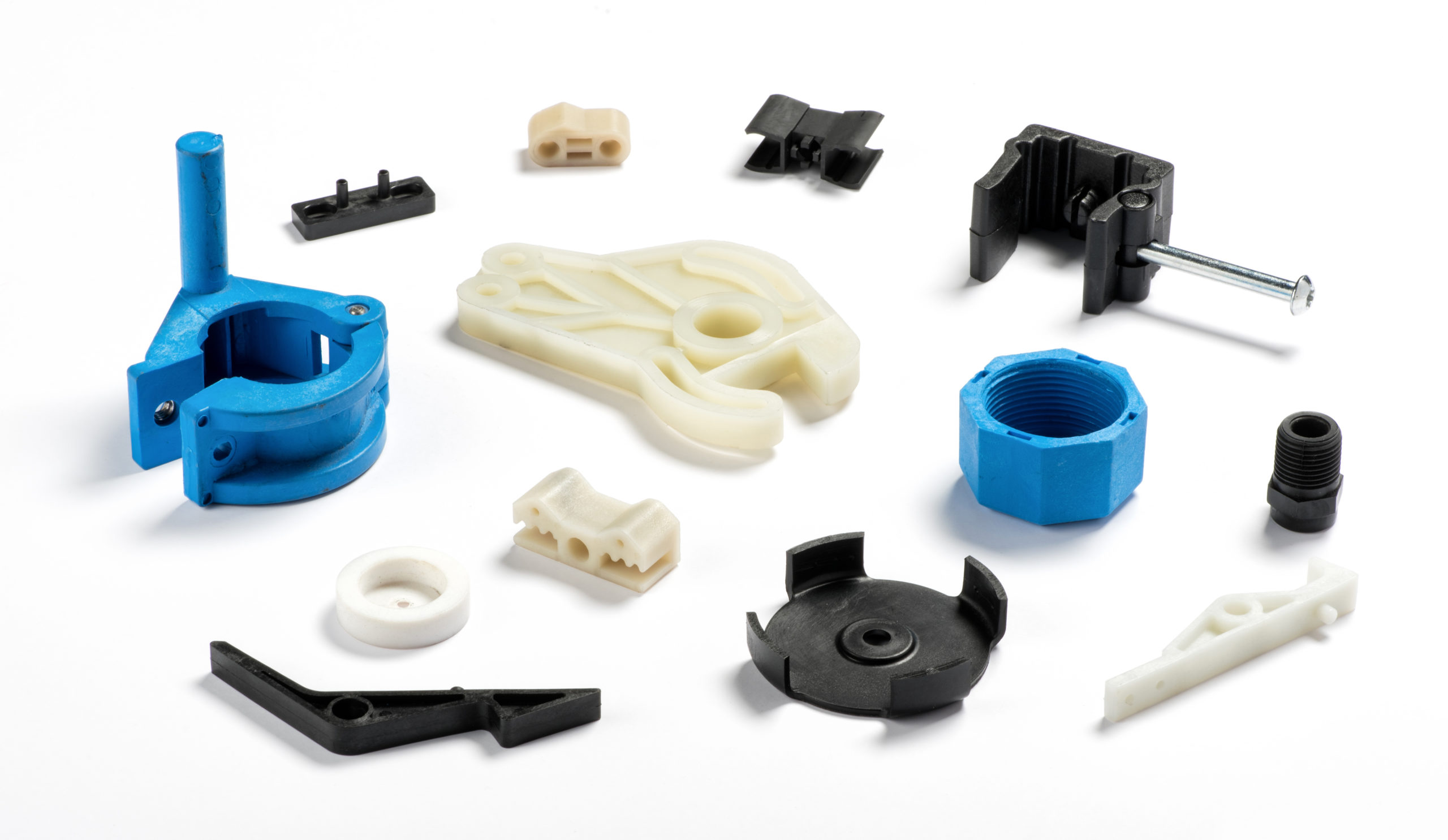
To facilitate faster ejection, a draft angle of 1°- 2° should be applied to all walls parallel to the parting direction of the clamping unit. In case design considerations do not allow draft angles, the use of a side action mold may be required. Applying draft and radii to a part is vital to a properly designed injection-molded part.
Injection Mold Design and Custom Tooling
Large parts will require larger gates to provide a bigger flow of resin to shorten the mold time. Small gates have a better appearance but take longer to mold or require higher pressure to fill correctly. Getting superior-quality injection molded parts require partnering with the most reliable manufacturing company. RapidDirect is a leading provider of high-quality plastic parts through advanced injection molding services. With an excellent combination of skilled technicians and state-of-the-art equipment, we offer parts with exceptional precision and visual appeal.
Moldmaking Resource Plastic Mold Makers, Mold Designers, Mold Repair Guide

They also increase part costs because they require molds that are made with electrical discharge machining (EDM). Best practice is to smooth, or blend, transitions between areas with different wall thicknesses to minimize stress concentrations that can result in part failure. This best practice promotes more consistent cooling and, consequently, more consistent shrinking. The parts manufactured with “pilot” aluminum molds have physical properties and accuracy identical to parts manufactured with “full-scale production” tool steel molds. Once your design ready and optimized for injection molding, what’s next?
Mini hot runner systems explore new applications - PlasticsToday
Mini hot runner systems explore new applications.
Posted: Wed, 13 Dec 2023 00:17:39 GMT [source]
Material Selection
Wall thickness must be consistent to reduce if not eliminate warping. If consistency is hard to achieve due to design limitations, the change in thickness should be done gradually. The use of a coring method will help eliminate such problems, while adding gussets will reduce warping. Deliver quality parts that meet requirements and exceed expectations.
Wall thickness can influence several key features of a component, including its performance, aesthetics, and cost. Therefore, you should determine the nominal wall thickness based on the functional performance requirements. You should consider the allowable stress and expected lifetime of the molded part to establish the minimum wall thickness. An inadequate design process may negatively affect the functionality and aesthetic appeal of injection molded parts. Such parts may be unable to perform their intended functions due to injection molding defects or other mechanical faults. The injection molding design guide will help choose the suitable molding parameters and avoid critical issues that may lead to parts failure.
Molding the Future: The Science of Plastics in Design
How the molten plastic enters, fills, and cools within the cavity to form the part largely drives what form the features in that part must take. Adhering to some basic rules of injection molded part design will result in a part that, in addition to being easier to manufacture and assemble, will typically be much stronger in service. Dividing a part into basic groups will help you to build your part in a logical manner while minimizing molding problems.

Key Design Considerations for Injection Molded Parts
Designing in sufficient draft can help reduce the need for ejector pins on a part. RibsA rib is a thin, wall-like feature parallel to the mold opening direction, its used to add strength and support to features like bosses and walls. To prevent sink, ribs should be no more than 60% of the wall’s thickness. When your design is truly final, you can ramp up production by ordering multi-cavity molds or family molds that combine different part numbers into the same mold base.
There are other guidelines to consider as well — some are a function of the mold-making process, but part designers need to understand them in order to evaluate tooling. In addition, keep wall thickness (or thicknesses) within range for the plastic material you’ve selected. The next section lists the recommended wall thicknesses for common plastic resins. For larger volumes to full-scale production (10,000 to 100,000+ units), the contribution of the tooling costs to the overall cost is overshadowed by the material and production costs. So, your main design efforts should focus on minimizing both the volume part and the time of the molding cycle.
Injection Mold Design Guide
Nowadays, each part of the process is performed by a specialist, meaning that one mistake could cause the entire project to be scrapped. So if you made a piece too big or too small, you could usually just adjust the adjoining part. At this point, additional specialized machinery will be employed to assist in material characterization testing – thermal, mechanical, environmental, physical, chemical, rheological, etc. And if you decide you’d like to leave your project to the professionals, reach out to RMC Plastics today!
Once the cavity is filled, a holding pressure is maintained to compensate for material shrinkage. In the next step, the screw turns, feeding the next shot to the front screw. Once the part is sufficiently cool, the mold opens and the part is ejected. Injection molding is a versatile and efficient technique for creating high-quality custom plastic components for various industries.
For example, if a designer can specify an ABS grade that matches the properties of one purchased in large quantities by a molder, many tens of thousands of dollars can be saved. A designer may discover certain high-performance resins may not be ideally suited for a molder due to viscosity, high glass content or crystallinity. A resin may be chosen for specific physical or chemical-resistance properties but may be very difficult to mold or maintain specified tolerances.
These side-actions move in tandem with the mold when it is opened and closed while the cam rides along an angled pin. When opened, the cam is fully retracted so the part can be easily ejected without mold damage and closes again till the cam is in position to create the next part. Sub gates are quite common and have several variations such as banana gate, tunnel gate, and smiley gate to name a few.
Edge gates are ideal for medium and thick sections and can be used on multicavity two plate tools. As the material cools and the molecular bonds re-link the resin into its rigid form, these stresses are in effect locked into the part. Part stresses can cause warpage, sink marks, cracking, premature failure, and other problems. Hand LoadAluminum or steel feature in a mold used to create undercuts in molded parts. They are manually removed from the mold during the part ejection process. Watch the recorded webinar to hear how Bastech delivers benchmarking results that prove the advantages of conformal cooling with significant improvements in cost, productivity and quality.


No comments:
Post a Comment